Most people researching dental assistant programs have a rough idea of what dental assistants do but less clarity on what the actual classes involve — what you study, in what order, and how the knowledge connects to the hands-on clinical work.
Here’s a detailed, honest look at what dental assistant classes cover: the content areas, the progression, and how each piece of the curriculum connects to what you’ll actually do on the job in Moses Lake and beyond.
The two sides of dental assistant training
Before getting into the specific subject areas, it helps to understand how dental assistant classes are structured. Every quality program has two distinct sides:
Knowledge-based content: The theory, anatomy, terminology, and procedural knowledge that forms the foundation of clinical competency. This can be delivered online or in a classroom.
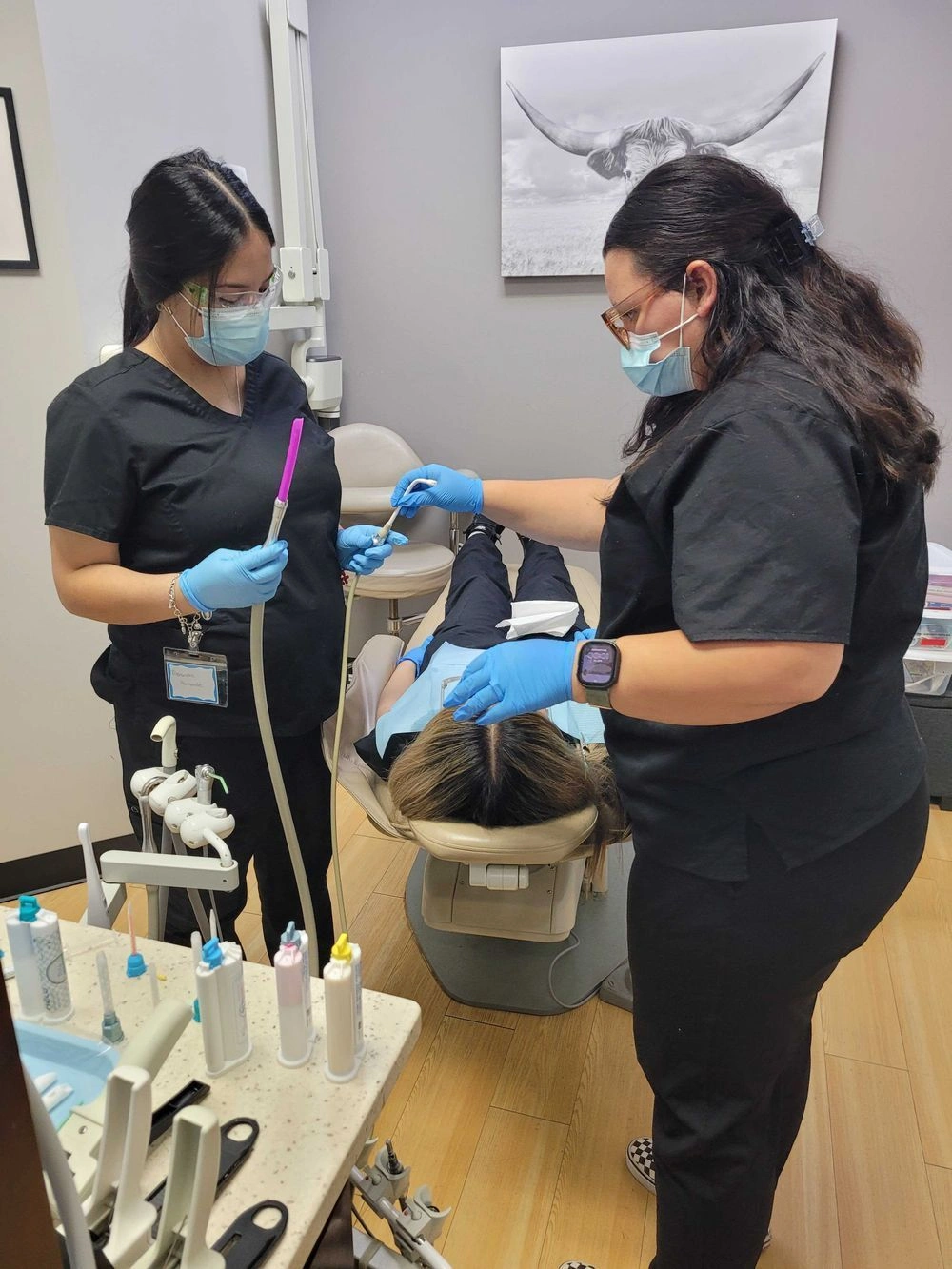
Skills-based content: The hands-on clinical practice that builds physical competency — chairside assisting, radiography, materials manipulation, sterilization. This must happen in person, with real equipment, ideally in actual dental offices.
The best programs integrate both throughout the curriculum, with knowledge content preceding and supporting each skills session.
Core dental assistant class content areas
1. Dental anatomy and terminology
The first thing you learn — and for good reason. You can’t communicate effectively in a dental office without understanding the language.
What this covers:
- Universal Numbering System, Palmer Notation, and FDI World Dental Federation system — the three ways dental offices number and identify teeth
- Tooth morphology — the shape and function of each tooth type (incisors, canines, premolars, molars)
- Tooth surfaces — mesial, distal, buccal, lingual, occlusal, incisal — and how they’re referenced in charting
- The periodontium — gingival tissue, periodontal ligament, cementum, alveolar bone
- Head and neck anatomy — nerves, muscles, salivary glands, temporomandibular joint
- Dental abbreviations and procedure codes used in clinical charting
Why it matters on the job: When the dentist calls for an instrument, describes a procedure, or dictates a chart note, you need to understand exactly what they mean — immediately.
2. Radiography (dental X-rays)
Dental radiography is a core clinical skill that dental assistants use every single day. The class covers both the knowledge and, critically, the hands-on practice.
What this covers:
- Radiation physics and biology — how X-rays work and why safety protocols exist
- Radiation safety — ALARA principles, lead aprons, thyroid collars, correct positioning
- Film and digital sensor types — periapical, bitewing, panoramic, occlusal radiographs
- Sensor and film placement technique — anterior and posterior techniques
- Tube head positioning and exposure settings
- Digital image acquisition and quality evaluation
- Identifying common errors and retake protocols
- State-specific radiation operator requirements
Why it matters on the job: In most states, dental assistants who take radiographs must hold a radiation operator certificate. This class prepares you for that requirement directly.
3. Infection control and sterilization
One of the most safety-critical areas of dental assistant training — and one that employers take very seriously.
What this covers:
- Microbiology basics — bacteria, viruses, and disease transmission in the dental setting
- OSHA bloodborne pathogens standard — exposure control plans, sharps disposal, post-exposure protocols
- PPE selection and use — gloves, masks, eyewear, gowns
- Surface disinfection — products, contact times, and documentation requirements
- Instrument sterilization — autoclaving, chemical vapor, dry heat
- Sterilization monitoring — spore testing, chemical indicators, biological indicators
- Dental unit waterline maintenance
- Sharps and biohazard waste management
Why it matters on the job: Infection control errors can result in patient harm, regulatory violations, and practice closure. Employers expect new hires to arrive with solid protocol knowledge.
4. Chairside assisting and dental procedures
This is the core of what dental assistants do — and the area where hands-on practice in real dental environments makes the biggest difference.
What this covers:
- Four-handed dentistry principles — coordinated workflow between dentist and assistant
- Instrument identification, transfer technique, and tray setup for major procedure types:
- Restorative (composite resin, amalgam)
- Oral surgery (simple and surgical extractions)
- Endodontics (root canals)
- Crown and bridge (impressions, temporaries, cementation)
- Orthodontics (bonding, wire changes, bracket removal)
- Pediatric dentistry
- Periodontal procedures
- Patient preparation — seating, draping, explaining procedures, managing anxiety
- Moisture control — suction, retraction, cotton rolls, dental dams
- Anesthesia assistance — preparing syringes, topical anesthesia, monitoring patients post-injection
- Post-operative patient care and instruction
Why it matters on the job: This is the daily work. The more procedures you’ve assisted with during training, the faster you contribute in your first clinical position.
5. Dental materials
What this covers:
- Impression materials — alginate, polyvinyl siloxane (PVS), polyether — mixing, loading, and taking impressions
- Restorative materials — composite resin, amalgam, glass ionomer — properties and placement assistance
- Temporary materials — provisional crowns, temporary cements
- Bonding agents and etchants
- Cements — zinc oxide eugenol (ZOE), resin-modified glass ionomer, permanent resin cement
- Whitening agents and fluoride treatments
Why it matters on the job: Materials are time-sensitive. Knowing how to mix, prepare, and manage each type without wasting it or letting it set prematurely is a skill employers value in new hires.
6. Dental pharmacology and medical emergencies
What this covers:
- Local anesthetics — types, dosages, vasoconstrictors, duration, contraindications
- Common dental medications — analgesics, antibiotics, anti-anxiety agents, their mechanisms and side effects
- Drug interactions relevant to dental care — medical history review for high-risk patients
- Medical emergency recognition and response — syncope, allergic reactions, hypoglycemia, cardiac events
- Basic Life Support (CPR/BLS) — required by most dental employers
7. Dental office administration
What this covers:
- Appointment scheduling and patient flow management
- Dental insurance — coverage types, verification, claim submission basics, prior authorizations
- Patient communication — intake, consent, financial arrangements, post-op follow-up calls
- Electronic health records and practice management software
- HIPAA compliance and patient privacy — documentation, communication standards
- Treatment plan presentation and patient financial discussions
What classes look like in a 12-week program
A 12-week dental assistant program delivers this curriculum in a compressed, efficient sequence. Knowledge content typically precedes the corresponding hands-on sessions, so by the time you’re in a dental office practicing radiography or chairside assisting, you’ve already covered the theory behind it.
At this school, hands-on training happens in real dental offices in Moses Lake — not campus simulation rooms. The workflow, the instruments, the pace, and the clinical environment are authentic from the start.
Skills that actually differentiate dental assistants on the job
After the classes are done and you’re working, the assistants who stand out share a few specific qualities:
Radiography confidence: Taking clean X-rays on the first attempt, managing difficult anatomy or anxious patients, and evaluating image quality without needing the provider to check everything.
Materials timing: Mixing impressions, cements, and composites at the right consistency and transferring them before set — without wasting a tray or slowing the provider down.
Anticipation: Knowing what instrument comes next before the dentist asks, having the tray set up correctly before they enter the room, and flagging supply issues before they become procedure interruptions.
Patient management: Calming nervous patients, explaining procedures clearly, handling a difficult post-op call professionally — these interpersonal skills are as valued as technical ones in most practices.
What dental assistants earn after completing their classes
- Entry-level: approximately $33,000–$40,000/year
- National median: approximately $46,000–$48,000/year (BLS, 2026)
- Specialty practices: $50,000–$62,000+/year with credentials and experience
The BLS projects 8% job growth through 2032 — consistent demand in Moses Lake and nationwide.